Observing the sky
Prepare a night of observing from France
Start with dark adaptation, a simple sky chart, and a clear forecast. These three steps decide much of what you can see, whether you observe with your eyes alone or with a telescope.
Step by step
Three methods for the naked eye
These routines work from most French locations and need no equipment beyond a chart and patience.
Step 1
Adapt your eyes
Allow twenty to thirty minutes in darkness. Avoid screens and white light, and use a red torch to keep your night vision.
Step 2
Star-hop across constellations
Begin with a bright, easy landmark such as the Big Dipper, then follow its pointer stars toward fainter neighbours on your chart.
Step 3
Track visibility
Check the forecast for cloud cover and transparency. Note the limiting magnitude you can see, so you can compare nights over time.
Dark skies
Light pollution hides the faint sky
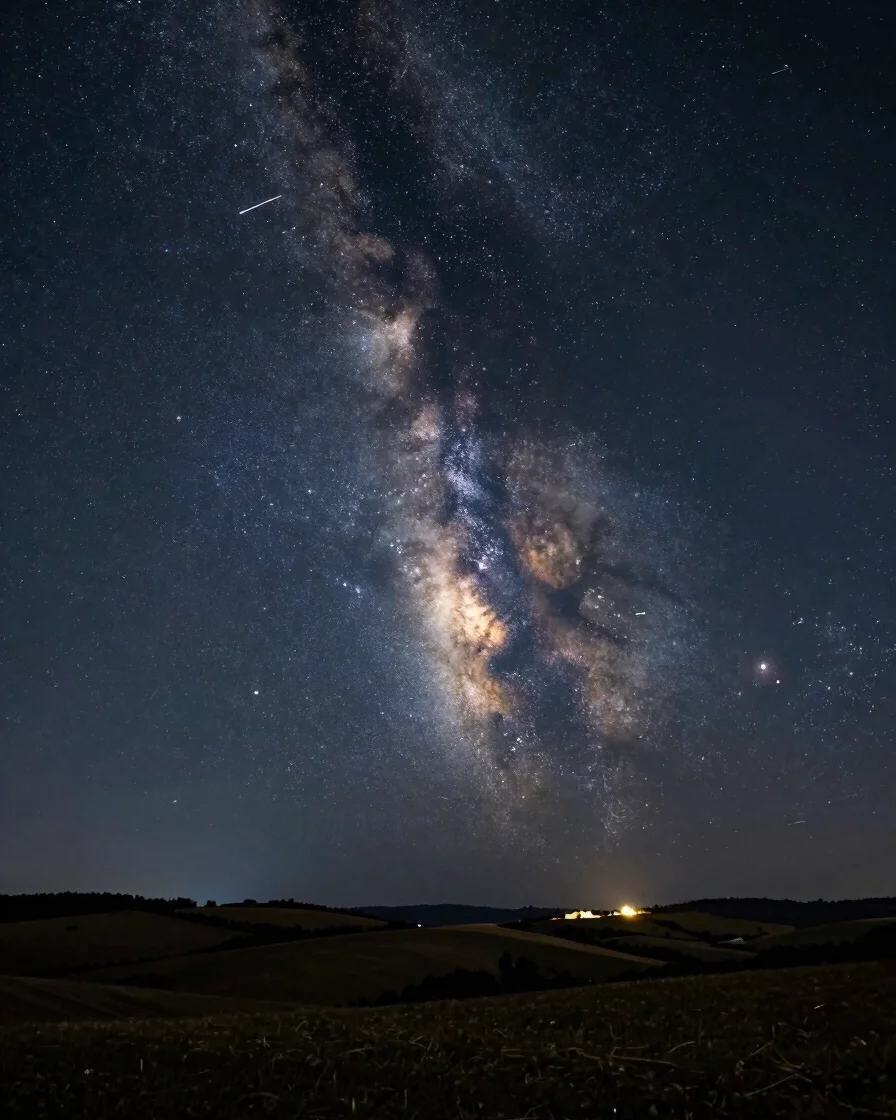
Artificial light scatters in the atmosphere and washes out faint stars and the Milky Way. Public maps of light pollution, such as the one published by the Lorraine Observatory, show how bright your area is.
France has rural dark-sky reserves where observing is easier. Look for a site away from town lights, face the darkest horizon, and turn off any light you do not need.