
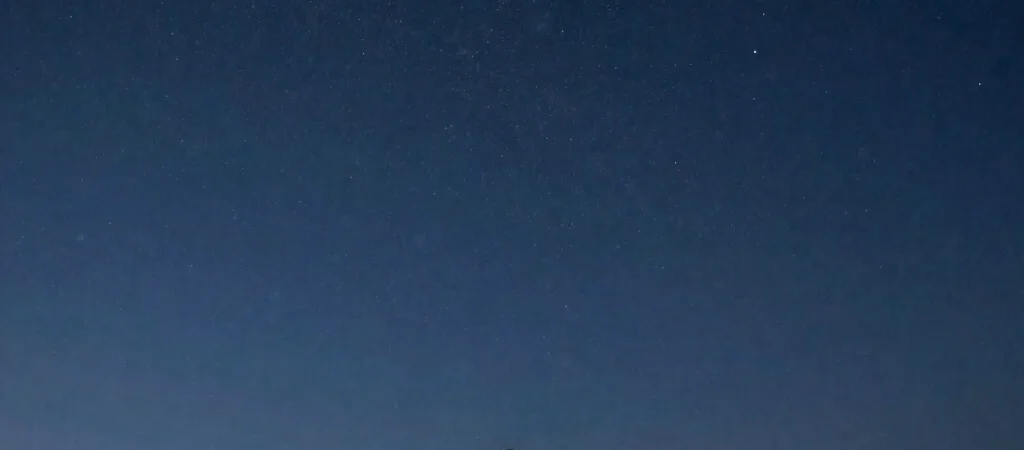
On a first night outside, the hardest part is often knowing where to look. Start somewhere with a clear view above the rooftops, give your eyes time to adjust, and choose one or two things to find rather than trying to name everything. From a garden, a balcony, or a village lane, the sky offers plenty to notice before you reach for a telescope.
Choose a workable spot
A darker location helps, but an unobstructed view and comfortable footing matter too. If you are observing near a town, face away from the brightest streetlights and look for a park or open space where lighting is limited. Check the forecast for cloud and haze, and dress for standing still outdoors—even a mild evening can feel chilly after a while.
Let your eyes adjust
Bright phone screens make faint stars harder to see, so dim your display and use a red-light setting if you have one. Give your eyes several minutes without looking at a bright light. A simple sky chart can help you match broad patterns to the horizon, but try looking up first; that way, the chart supports your observation instead of replacing it.
Start with a small target
Pick a recognizable constellation, the Moon, or a bright object whose identity you can check with a reliable chart. The Moon is a rewarding first target even through binoculars, though never point binoculars or a telescope at the Sun. For observing times and sky positions from France, consult a current chart or the IMCCE’s astronomical resources, then make a note of what you actually saw.